剧本ID:
177021
角色: 0男0女 字数: 1189
作者:辛夷格格
关注



01
From May 23 to 26, 2024, the sixth Western China International Fair for Investment and Trade (WCIFIT) was held in Chongqing. Themed “New Western China, New Manufacturing, New Services,” the event attracted nearly 1,800 enterprises from 27 Chinese municipalities, provinces, and autonomous regions as well as from 40 countries and regions to participate in five thematic activities, namely, logistic services, innovative services, professional services, investing in western China, and global purchasing.
A total of 196 major projects were signed at the sixth WCIFIT spanning fields such as intelligent networked new energy vehicles, intelligent equipment, smart manufacturing, and modern finance, with the majority focusing on the development of new quality productive forces.
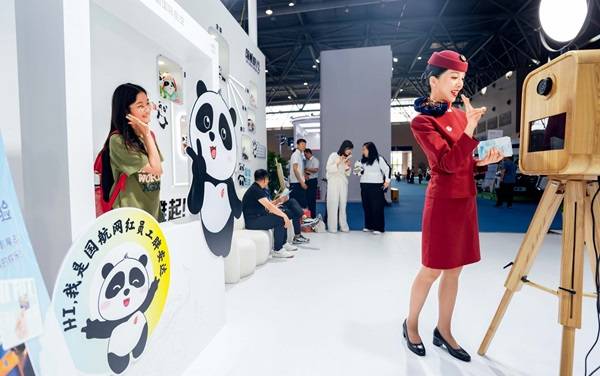
A visitor experiences 3D photography at the Air China booth during the sixth Western China International Fair for Investment and Trade in southwestern China's Chongqing Municipality. (Photo by Wan Quan/China Pictorial)
02
2024 has been designated as the Cambodia-China People-to-People Exchange Year. On May 23, the inaugural exhibition of “Ningbo through the Lens: Enterprise & Business Exhibitions around the World” opened in Phnom Penh, capital of Cambodia. With more than 90 captivating photos, the exhibition vividly shared Chinese stories, empowering Cambodian residents to experience China's traditional culture and modern development while building a platform of friendship between Chinese and Cambodian peoples.
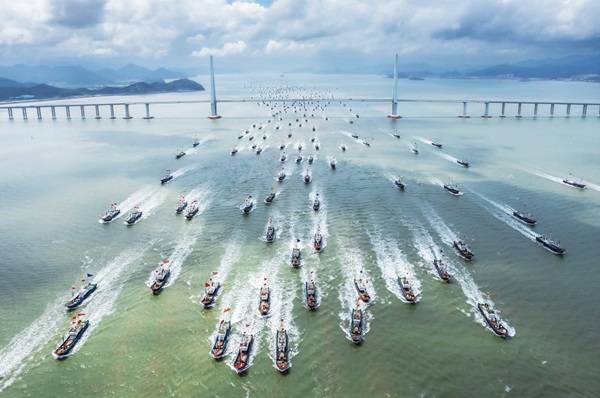
To protect the marine ecosystem, China launches a seasonal fishing moratorium that lasts four and a half months every year. Here, hundreds of fishing boats sail to sea after the end of the seasonal moratorium in Ningbo, southeastern China's Zhejiang Province. (Photo courtesy of the Publicity Department of the CPC Ningbo Municipal Committee)
Text by Zhang Jingwen
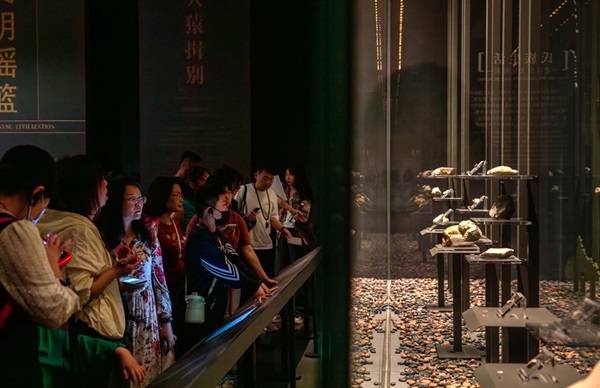
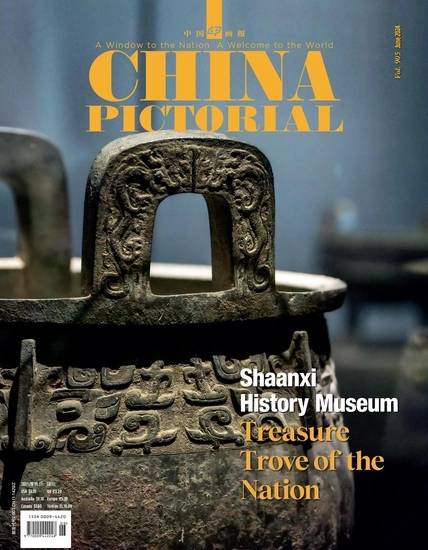
The Shaanxi History Museum serves as a national beacon of civilization and a venue for national gatherings. It has earned the moniker “pearl of the ancient capital and treasure trove of the nation.” It is energized by millennia of cultural heritage and generates resilience by tapping centuries of historical shifts. Taking the tide of China's reform and opening up, it radiates the brilliance of the Chinese civilization in the modern era.
03
In 1978, China embarked on a path of reform and opening up. Preparations for the Shaanxi History Museum began that year. Construction was finally completed on June 20, 1991, and China's first large modern museum since the launch of the reform and opening up opened to visitors. It bears witness to and plays a role in China's reform journey.
04
Museums derive strength from culture and the passage of time. With over 1.7 million pieces (sets) of artifacts, the Shaanxi History Museum's extensive and valuable collection in complete sequences has defined its pivotal role in China's cultural and museum sectors. The founding of the museum was hailed as a milestone in the history of Chinese museums, spurring a surge in museum construction around the country and bridging the persisting gaps with developed countries.
05
Completion of the Shaanxi History Museum brought the glorious eras of Chinese civilization spanning the Zhou (1046-256 B.C.), Qin (221-207 B.C.), Han (202 B.C.-220 A.D.), and Tang (618-907) dynasties into the modern age, reintroducing the world to the ancient yet vibrant peak of Eastern culture. In the year when it first opened, Jacques Chirac, who served two terms as president of France, visited the museum and called it “the world's most beautiful museum,” noting its magnificent architecture, rich exhibits, exquisite treasures, and historical significance. Leaders from around the globe including former U.S. President Bill Clinton, former U.S. Secretary of State Henry Kissinger, Japanese Emperor Akihito, Spanish King Felipe VI, and former Greek Prime Minister Costas Simitis have visited the museum, which showcases China's brightest cultural achievements on the world stage.
06
In Shaanxi's archaeological and cultural sphere, a series of deeply ingrained principles have prevailed: Archaeological excavation is the foundation, technology-based preservation is the core, exhibitions are instrumental, and serving society is the ultimate goal. Since its establishment, the Shaanxi History Museum has prioritized the development of its exhibition capabilities as a key area of focus.
07
In 2008, national museums and memorials in China began opening to the public for free, marking a significant development in the country's cultural and museum sectors. In March of that year, the Shaanxi History Museum revamped its primary exhibition, “Shaanxi Ancient Civilization,” and made it freely accessible to visitors. Its debut generated significant attention in the cultural and museum sectors. The exhibition's innovative design, high-quality craftsmanship, and interactive displays integrated a million years of human history, over ten thousand years of cultural history, and more than five thousand years of civilization in China.
08
Starting with the “Shaanxi Ancient Civilization” exhibition, the Shaanxi History Museum has engineered a series of remarkable displays. These include themed exhibitions like “Tang Dynasty Treasures: Exhibition of Cultural Relics Unearthed at Hejia Village” that showcases the splendor of the Tang Dynasty's ritual systems, palace banquets, and social customs, and “Precious Tang Dynasty Murals Exhibition,” which offers valuable insights into Tang Dynasty art and cultural exchange along the Silk Road. As research into the museum's collections has deepened, it has consistently earned recognition as one of the “Top Ten Outstanding National Museums of China.” While continually innovating exhibition formats, the museum has also explored new models for inter-museum cooperation.
09
Since the 18th National Congress of the Communist Party of China (CPC) in 2012, China's cultural and museum sectors have flourished thanks to a series of initiatives from the Party and the state. During his visit to Shaanxi in 2015, President Xi Jinping, also general secretary of the CPC Central Committee, highlighted the importance of preserving and managing cultural relics because they represent China's traditional culture. He also stressed a need for enhanced research and innovative utilization to enable history and cultural relics to speak.
10
Before life can be breathed into artifacts, they must first leave storages and find a place in an exhibition. Despite a collection exceeding 1.7 million items, the Shaanxi History Museum displays only about 3,000 pieces to the public, leaving many national treasures sealed in storages, which is regrettable. To inspire history and artifacts to speak, the museum follows the latest achievements of the project to trace the origins of Chinese civilization and other major archaeological projects as they craft exhibitions featuring more artifacts at the forefront to contribute to the narrative of civilization.
11 the last paragraph
The Qin and Han hall at the Shaanxi History Museum opened to the public on May 18 this year, marking a major milestone and the onset of a new era in the development of the museum. Striving to become a world-class museum with Chinese characteristics, the Shaanxi History Museum plans to collaborate with its global counterparts to bridge history with the present, connect China and the world, and uphold historical preservation while honoring civilization.
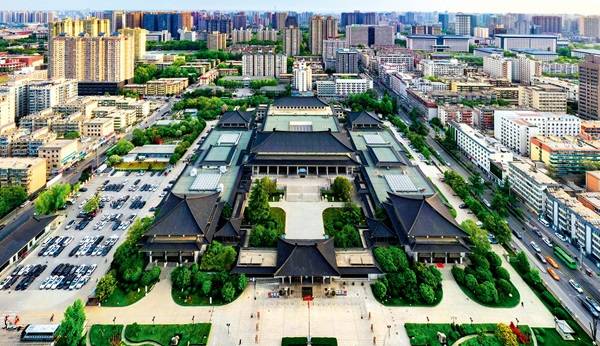
The Shaanxi History Museum is situated to the northwestern side of the Tang-Dynasty Giant Wild Goose Pagoda in the southern suburb of Xi'an City. (Photo by Xu Xun/China Pictorial)