剧本ID:
921565
角色: 0男0女 字数: 2069
作者:已退休吖
关注



Celebrities make ‘manifest’ appear as 2024 word of the year
名人使得“manifest”一词成为2024年年度词汇
Cambridge Dictionary opts for word now used as a verb meaning to will something into existence
《剑桥词典》选择了这个现在用作动词、意为“凭意志使……成为现实”的单词(作为年度词汇)
“Manifest”, meaning to dream or will something into existence, has been named the word of 2024 by Cambridge Dictionary, after a surge of celebrity-inspired popularity on social media.
Manifest 一词意为“通过梦想或凭借意志使某事成为现实”,在社交媒体上因受名人影响而人气飙升,被《剑桥词典》评为2024年年度词汇。
Though far from a new coinage — as an adjective meaning “clear” or “obvious”, the word dates back in English to at least the 1300s — the dictionary’s decision rests on its newest meaning as a verb, which attests to the power of visualisation and positive thinking in making fervently held dreams come to pass. ***
尽管 manifest 一词并非新造词(用作形容词,意为“清晰的”或“明显的”,这个词在英语中的历史至少可以追溯到14世纪),但该词典做出这一决定是基于其作为动词的最新含义,这一含义恰恰证实了在将人们热切期盼的梦想变为现实的过程中,想象和积极思考所具备的力量。
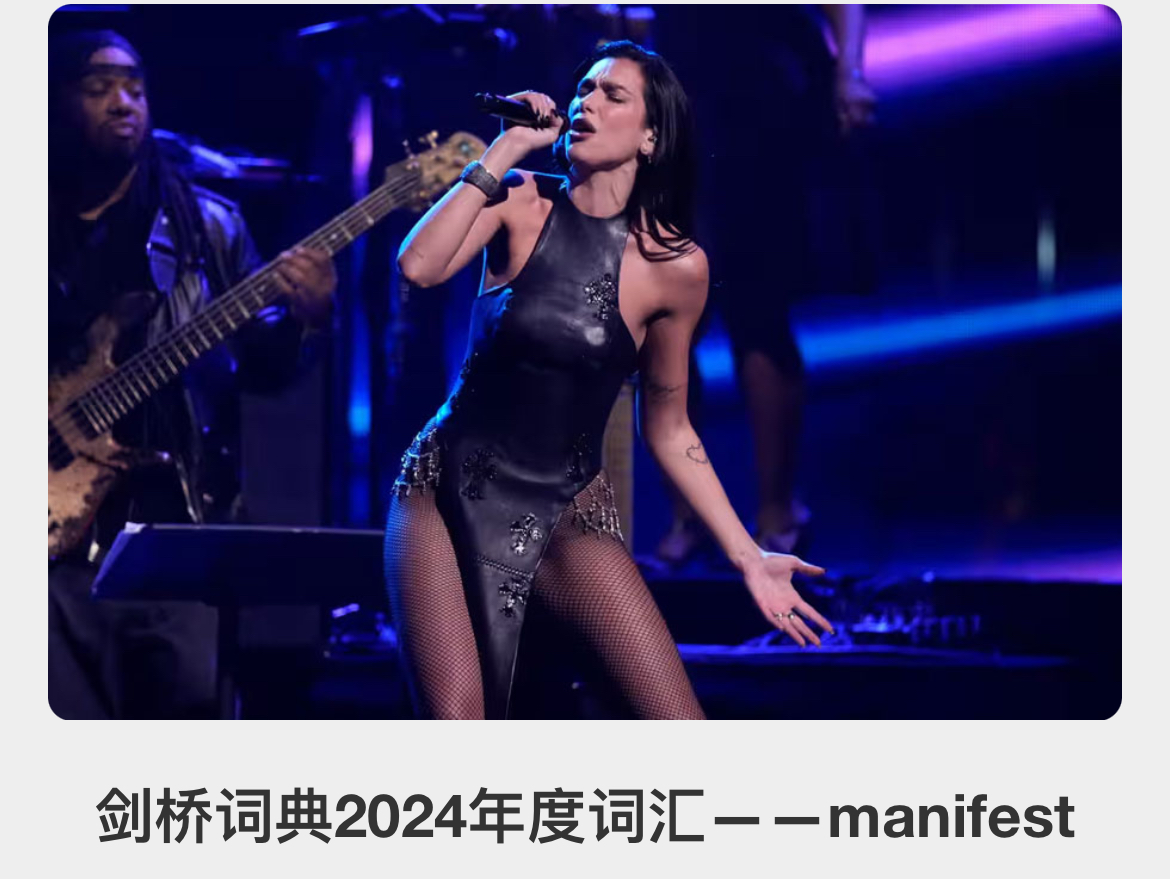
The singer Dua Lipa has attributed her success—which included headlining Glastonbury in June—to manifesting, saying: “Manifesting is a big thing for me. I stand very firmly in the belief of putting things into the world. Subconsciously, you just work towards them. Nothing’s ever too big.”
歌手杜阿·利帕(Dua Lipa)将自己的成功(包括六月份在格拉斯顿伯里音乐节上担任主唱)归功于“意念显化(manifesting)”这种方法,她说道:“manifesting 对我来说意义重大。我坚信要把想法付诸实践。潜意识里,你就会朝着这些目标努力。没有什么目标是遥不可及的。”(译者注:manifesting 表示通过强烈的意念、积极的思维和想象,将内心渴望的事物(如成功、财富、爱情等)在现实生活中实现。这种含义带有一种比较主观、唯心的色彩,强调人的精神力量对现实的影响。)
Simone Biles, too, has been credited with manifesting her award-winning gymnastics career, after speaking of visualising future success when she was a young girl.
西蒙·拜尔斯(Simone Biles)也曾被认为是凭借 manifesting 成就了自己屡获殊荣的体操生涯,此前她曾提到自己在年幼时就曾想象过未来的成功。
Wendalyn Nichols, the publishing manager of the Cambridge Dictionary, said the word manifest had “increased notably in lookups” this year, being searched for 130,000 times on the Cambridge Dictionary website.
《剑桥词典》的出版经理温达林・尼科尔斯(Wendalyn Nichols)表示,manifest 一词今年的 “搜索量显著增加”,在《剑桥词典》网站上搜索次数达到了13万次。
“Its use widened greatly across all types of media due to events in 2024, and it shows how the meanings of a word can change over time,” she said.
她说:“由于2024年发生的诸多事件,它(manifest 一词)在各类媒体中的使用范围大幅扩大,这也表明了一个单词的含义是随着时间的推移而发生变化的。”
Derived from French and Latin, the word, spelled “manyfest”, was used by Chaucer in the late 14th century in its adjectival sense meaning clear or obvious.
该词源于法语和拉丁语,拼写为“manyfest”,乔叟(Chaucer)在14世纪晚期就曾使用过它的形容词词性,意为“清晰的”或“明显的”。(译者注:Chaucer 指的是杰弗雷·乔叟(Geoffrey Chaucer),是英国中世纪著名的诗人,被誉为“英国诗歌之父”,其最著名的作品是《坎特伯雷故事集》。)
Shakespeare employed the word as both a noun and a verb, meaning both obvious and to make obvious. In King Lear, the Duke of Albany denounces Edmund for his “heinous, manifest, and many treasons”, while Twelfth Night’s tragi-comic figure Malvolio delights in supposed praise of his yellow stockings from Olivia, saying: “And in this she manifests herself to my love.”
莎士比亚既把这个词用作名词,也用作动词,其含义既表示“明显的”,也表示“使……明显”。在《李尔王》中,奥尔巴尼公爵(the Duke of Albany)谴责埃德蒙(Edmund)犯下了“十恶不赦、昭然若揭(译者注:这里使用的 manifest 的形容词含义)且数量众多的叛国罪行”;而在《第十二夜》里,带有悲喜剧色彩的人物马伏里奥(Malvolio)因奥利维娅(Olivia)看似对他的黄色长袜表示赞赏而欣喜不已,说道:“从这件事上,她向我表明(译者注:这里使用的 manifest 的动词含义)了对我的爱意。”
The King James Bible of 1611 translates the first epistle of John to read: “In this was manifested the love of God towards us.”
1611年出版的《英王詹姆士钦定圣经》在翻译《约翰一书》时这样写道:“神对我们的爱就在此显明(manifested)了。”(译者注:《英王詹姆士钦定圣经》(The King James Bible)也被称为《钦定版圣经》,是17世纪初,英王詹姆士一世(King James I)为了统一英国国内的宗教教义解释和礼拜仪式等宗教事务,组织众多学者进行翻译的一个《圣经》英译本。)
The word can also be used as a noun, meaning the full list of a ship’s cargo, a usage that dates to 1561, while “manifest destiny” was a term employed by the US president Andrew Jackson in the 1830s to suggest it was ordained that American settlers should spread westward across the continent. ***
该词还可以用作名词,意为船舶货物的详细清单,这种用法可以追溯到1561年;而“manifest destiny”是美国总统安德鲁・杰克逊(Andrew Jackson)在19世纪30年代使用的一个术语,该术语意在表明美国移民应该向西扩张到整个大陆,这是命中注定的。
However, its most recent meaning, of “speaking your dreams into existence” is first recorded only in the early 20th century, associated with Spiritualism, and has become widespread only more recently.
然而,该词最新的含义,即“将你的梦想说出来,使之成为现实”,最早记载于20世纪初,当时与唯灵论有关,而直到近期才变得更为广泛流传。(译者注:作为一种哲学或宗教观念,Spiritualism 强调精神(spirit)是世界的本质,物质是精神的外在表现。它与唯物主义(Materialism)相对立,认为精神层面的事物,如灵魂、意识等是首要的,并且在解释宇宙、生命等诸多现象时,更注重精神因素的主导作用。)
Sander van der Linden, a professor of social psychology at Cambridge University, credited social media and the pandemic for popularising the term and practice of manifesting, but cautioned that it had no scientific validity.
剑桥大学社会心理学教授桑德・范德林登(Sander van der Linden)将“manifesting”这一术语及相关做法的流行归因于社交媒体和新冠疫情,但他也提醒道,这并没有科学依据。
“Manifesting is what psychologists call ‘magical thinking’ or the general illusion that specific mental rituals can change the world around us.
“manifesting”就是心理学家所说的“神奇思维”,或者说是一种普遍存在的错觉,即认为特定的心理仪式能够改变我们周围的世界。
“Manifesting gained tremendous popularity during the pandemic on TikTok with billions of views, including the popular 3-6-9 method, which calls for writing down your wishes three times in the morning, six times in the afternoon and nine times before bed.
在疫情期间,“manifesting”在抖音(TikTok)上大受欢迎,浏览量达数十亿次,其中包括广为人知的“3-6-9方法”,即在早上把自己的愿望写三遍,下午写六遍,睡觉前写九遍。
“This procedure promotes obsessive and compulsive behaviour with no discernible benefits. But can we really blame people for trying it, when prominent celebrities have been openly ‘manifesting’ their success?
这种做法会助长强迫性和强制性行为,却没有明显的益处。但是,既然知名的名人都一直在公开宣扬他们通过“manifesting”这一做法获得的成功,我们又怎能真的责怪人们去尝试这么做呢?”
“There is good research on the value of positive thinking, self-affirmation, and goal-setting … However, it is crucial to understand the difference between the power of positive thinking and moving reality with your mind—the former is healthy, whereas the latter is pseudoscience.”
“关于积极思考、自我肯定以及目标设定的价值,已有充分的研究……。然而,至关重要的是要明白积极思考的力量与凭借意念改变现实之间的区别——前者是有益健康的,而后者属于伪科学。”